
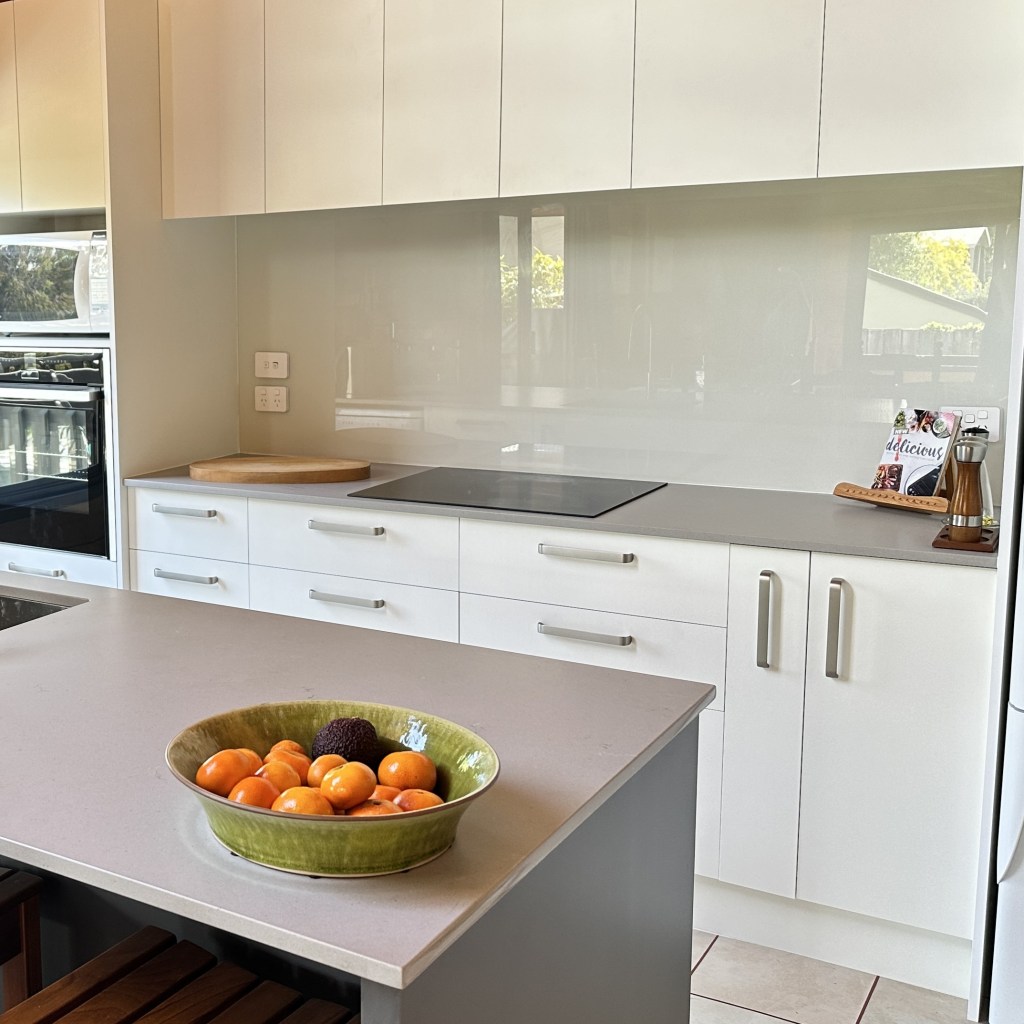
Various kitchen benchtops are available, so it is easy to become confused about which option to choose. Here is an overview of some of the most common options and the benefits of each option along with some of their disadvantages to help you decide which is the best fit for your kitchen.
High Pressure Laminate (HPL)
We’re probably all familiar with the brightly coloured old-style Formica benchtops that were popular in days gone by. The updated version of this is a high-pressure laminate, or HPL for short. This is still a popular choice for benchtops as it has a lot of benefits:
ADVANTAGES:
- COST EFFECTIVE – Traditionally cheaper than the other benchtop options, this offers an economical choice if you want to update your kitchen with a modest budget.
- HYGIENIC – A non-porous surface area that is resistant to bacteria. Selected products also have an antimicrobial surface.
- STAIN RESISTANT – Provides a stain-resistant surface area that is easy to clean.
- DURABILITY – Durable surface provided they are treated with the correct care.
- VARIETY OF STYLES – There is an extensive range of colours and patterns as well as edge types that can mimic granite, timber, steel and other more expensive finishes.
DISADVANTAGES:
- LOW HEAT RESISTANCE – Placing hot items directly onto the surface can cause the laminate to scorch, melt, or bubble. Once it’s damaged, unfortunately it’s permanent. So you have to ensure that you always have a heat mat within arm’s reach.
- VULNERABILITY TO MOISTURE – the “swell” factor. While the laminate surface itself is waterproof, the substrate (the particleboard or MDF underneath) is not. If water seeps into the seams—especially around the sink or at the joins – this can lead to swelling and “blown” joins, where the surface becomes uneven and the laminate may eventually peel away.
- NOT SCRATCH OR CUT PROOF – HPL is relatively tough, but it’s no match for a chef’s knife or abrasive cleaning pads. Cutting directly on the benchtop can leave permanent slice marks. Over time, fine scratches can make the finish look dull, especially on dark or high-gloss decors. Unlike wood or solid surface, you cannot sand these scratches out.
- LIMITED REPAIRABILITY – If you chip the edge or burn the surface, there is no “invisible” fix. While there are color-matched fillers available, they are usually quite obvious. Significant damage often means you have to replace the entire section of the benchtop.
- VISIBLE SEAMS AND EDGES – Unless you opt for a “post-formed” (curved) edge, you may see a thin brown or black line at the edges where the different layers of laminate meet. This can make the benchtop look “segmented” rather than like a solid slab of material.
—
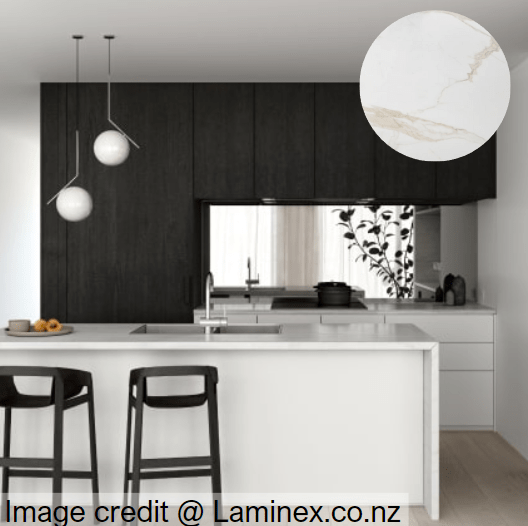
Example use of High Pressure Laminate
Solid Surface/Acrylic
There are a variety of different brands of solid surface and acrylic options. These options are created using acrylic resin, minerals and pigments to form a solid work surface. They have a wide range of benefits, particularly regarding joins and the ability to repair them. However, they are not as scratch-resistant as other surfaces. They are typically a jump-up in price from an HPL option.
ADVANTAGES:
- SEAMLESS JOINS – Large islands and surface areas appear to be fabricated from a single piece as opposed to HPL and Engineered stone, where the joins can be more obvious.
- REPAIRABLE – In many cases benchtops can be repaired and refurbished to look as good as new.
- HYGIENIC – A non-porous surface area that is anti-bacterial and meets hygiene standards.
- STAIN RESISTANT – A stain-resistant surface area that is easy to clean (and colours don’t fade).
- FLEXIBILITY- A vast array of design options when it comes to size, shape, colours, thickness and length.
DISADVANTAGES:
- LOW HEAT RESISTANCE – “Thermal shock” from hot items can cause this style of benchtop to crack and deform. You could be left with a literal crack in the surface or a permanent ring.
- SCRATCHES EASILY – This is a softer surface than stone so you can have fine spider web scratches. Dark or high surfaces show these up even more so light colours, textures and matt finishes are recommended.
- CHEMICAL SENSITIVITY – Strong chemicals like paint thinners, oven cleaners, or even some nail polish removers can “etch” or bleach the surface. This can leave permanent cloudy patches that require professional resurfacing to fix.
- PRICE POINT – Solid surface often costs as much as – or sometimes more than – entry& mid range stone options.
—
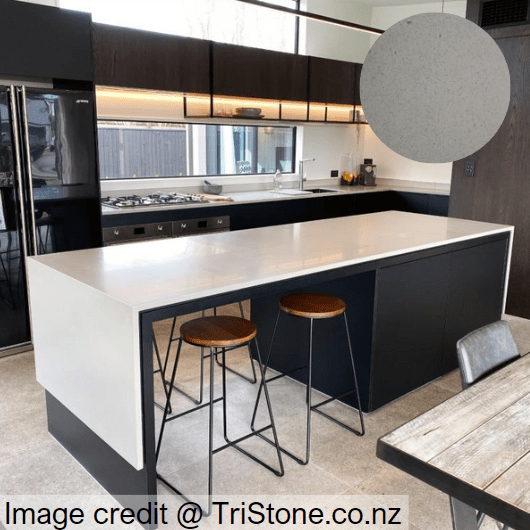
Example use of solid-surface benchtop
Engineered Stone
One of the most popular choices for benchtops, this option is typically a step up in price from both HPL and Solid Surfaces. However there may be some entry level stone options that are a similar value to solid surface. Engineered stone is a manufactured stone product using quartz pigments and fillers. This process provides a more uniform look than natural stone and creates a hardy work surface. However, it does pay to note that harsh impacts to edges can result in chips.
ADVANTAGES:
- STAIN RESISTANT – A non-porous easy clean surface. Most spills and grease will clean up easily with a damp cloth and mild detergent. Stubborn stains will require a mild crème cleanser more care may be needed with honed surfaces.
- HEAT RESISTANT – Surfaces can tolerate moderate heat but sudden temperature changes can permanently damage them. Always place a heat pad or trivet underneath pots and pans and cooking appliances such as crock pots etc.
- IMPACT RESISTANT – The surface is highly impact-resistant, but surface edges are not impact-proof.
- CONSISTENCY – As engineered stone is a manufactured product, the overall look of the finished product will be more consistent across the entirety of the surface.
- VERSATILITY – Available in a variety of different colour ways and has different thickness and slab size options. There are entry level options through to high end.
DISADVANTAGES:
- THE HEALTH CRISIS – As of 2024–2026, there has been a conscious move to Zero or Low Silica alternatives of engineered stone. This is due to the high levels of crystalline silica dust produced during cutting, which causes the fatal lung disease silicosis. These are safer to manufacture, however their long-term durability is still being proven.
- NOT ACTUALLY “HEAT PROOF” – Engineered stone is held together by polyester or acrylic resins, it cannot handle extreme heat. So a hot pot or can cause cracks or permanent yellowing/scorching of the resin.
- EDGE CHIPPING – While it’s very hard to scratch the flat surface, the edges – especially around the sink or corners – can chip if struck by a heavy cooking items, these can often be fixed but it’s rarely a perfect match and the texture might feel different.
- CHEMICAL SENSITIVITY – While it’s non-porous and resists wine or coffee stains well, it’s surprisingly sensitive to high-pH chemicals. Harsh oven cleaners, drain cleaners, or even some heavy-duty degreasers can “etch” the surface, leaving a dull, cloudy mark that cannot be wiped away.
—
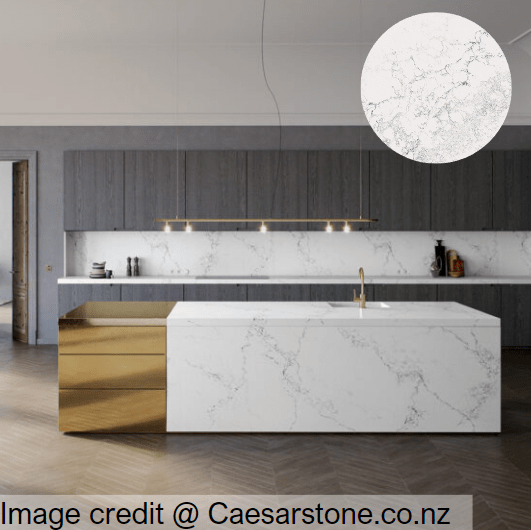
Example use of engineered stone
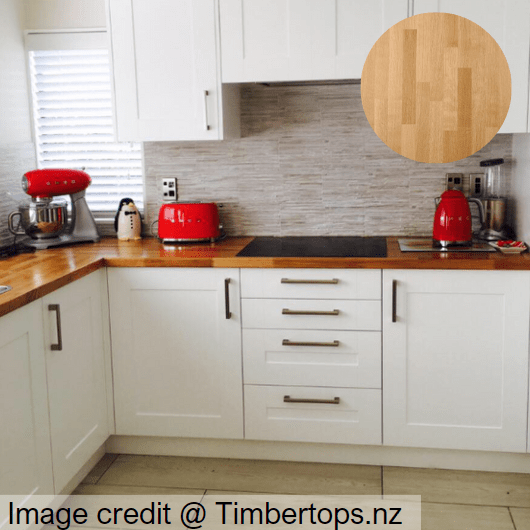
Timber
Timber benchtops bring a lovely warmth into any kitchen, although they are not as durable as other surface types. Using sustainable hardwood timbers creates a tough surface that is forgiving and can be easily repaired. There is no denying that they add wonderful character to a traditional or contemporary style kitchen. Soft on elbows and warm to the touch, they are a softer surface than many other benchtop options. Plus, they have natural anti-bacterial properties.
ADVANTAGES:
- NATURAL BEAUTY – Bring a wonderful warmth and character into any kitchen space.
- REPAIRABLE – Dents and ruptures can typically be easily repaired on site by a qualified tradesman.
- IMPACT RESISTANT – Surfaces are impact resistant, however please note they are not impact proof and some denting from heavy objects is possible.
- HYGIENIC – Timber has natural anti-bacterial properties.
- STYLE CHOICES – There are a variety of options available from solid wood, finger jointed timber and bamboo. Timber types range from lighter tones such as European Ash through to darker finishes like Walnut and Blackened Oak, plus there is the option of staining timber to suit.
DISADVANTAGES:
- HIGH MAINTENANCE – To keep it from drying out, cracking, or staining, you must regularly sand and re-oil it (usually every 3–6 months depending on use). If you neglect this, the wood loses its luster and its protective barrier, making it vulnerable to everything else on this list.
- WATER DAMAGE & ROT – Water is the natural enemy of wood. Standing water—especially around the sink or under a dish rack—can seep into the grain. This leads to black mold spotting, warping, or even rotting. If water gets into the joins, the wood can expand and cause the benchtop to buckle or split.
- LOW HEAT RESISTANCE – Wood burns. There’s no way around it. A hot pot or pan will leave a permanent black scorch mark or a “branded” ring on the surface. While you can sand out a shallow burn, deep scorch marks are permanent and may require a professional to patch or replace a section.
- DENTS & SCRATCHES – Dropping a heavy can of soup or sliding a ceramic pot can leave deep dents and gouges. This adds “character” (the “patina” look) that can add to it’s natural beauty, but if you prefer a pristine look then timber may not be your best option.
- HYGIENE & POROSITY – If the seal (oil or polyurethane) fails, timber becomes porous. Raw meat juices or spilled liquids can soak into the wood fibers. This can harbor bacteria and lead to unpleasant odors if the surface isn’t meticulously cleaned and maintained.
—
Example use of Timber
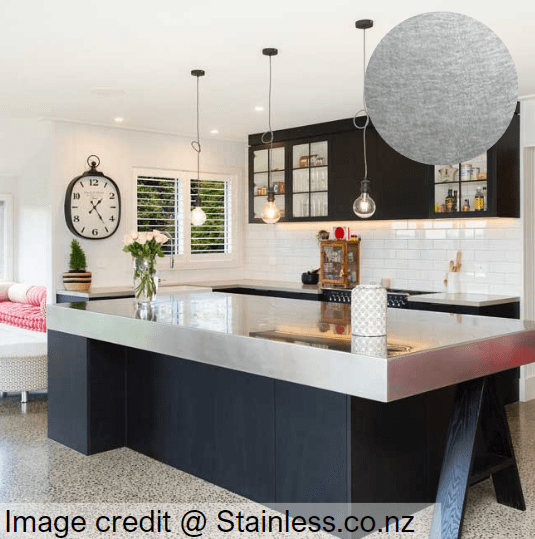
Stainless Steel
An enduring, high-end finish that is designed to last. Stainless steel provides a highly durable, hygienic surface. There is a reason why it is highly used in commercial kitchens: it is incredibly robust. There are a variety of finish options, including textured and coloured. However, this is one of the more expensive options, and you should consider the cost of maintenance within your purpose price, as using a buffing service may be needed from time to time to help keep your surfaces looking great.
ADVANTAGES:
- DURABILITY – It is one of the most durable kitchen benchtop surfaces available, which is why it is used in high-use and commercial areas.
- VERSATILITY – With a variety of textured finishes, it can be used to enhance and create a strong design statement. Choose from embossed, patterned and coloured metal finishes.
- SIMPLE MAINTENANCE – Stainless steel will not chip, crack, peel or fade over time, and buffing services can help restore benches.
- HYGIENIC – Stainless steel is the international product of choice in the food industry. It is a non-porous surface; therefore, bacteria can be wiped away. No joins or gaps for germs to build up in makes stainless steel an easy-clean, bacteria-free surface.
DISADVANTAGES:
- PATINA OF SCRATCHES – Unlike stone, which resists scratches, or timber, which hides them in the grain, stainless steel will show every single scratch from a slipped knife or a dragged grocery bag. Within the first few months, your pristine, mirror-like surface will develop a “patina”—a network of fine scratches. While some people love this “well-used” look, others find it stressful and messy.
- NOISE (THE DRUM EFFECT) – Because it is a thin sheet of metal typically wrapped over a wooden substrate, it can be quite loud. Setting down a heavy pot, clinking cutlery, or even the vibration of a blender can create a metallic “clanging” or “drumming” sound. High-end fabricators use sound-deadening pads underneath, but it will still be significantly noisier than stone or laminate.
- FINGERPRINTS & SMUDGES – The natural oils from your hands react with the metal, leaving visible fingerprints and smudges almost instantly.You will find yourself constantly reaching for a microfiber cloth and specialiSed stainless steel cleaner to keep it looking “showroom fresh.” (Note: Newer “brushed” or “linen” finishes hide this better than polished steel).
- DENTS ARE PERMANENT – While it won’t crack like stone or swell like laminate, it can be physically deformed. If you drop a heavy item it can leave a visible dent in the metal. There is no easy way to “pop” a dent out of a kitchen benchtop. Once the metal is stretched, that dimple is there for life.
—
Example use of Stainless Steel
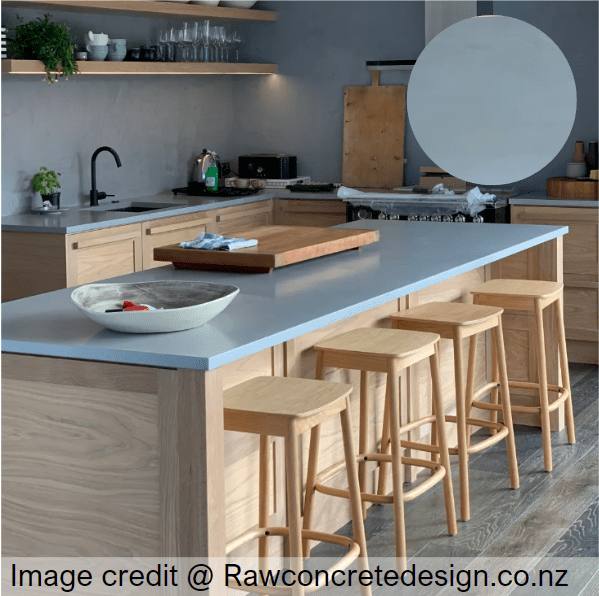
Concrete
Concrete lends a wonderful authenticity to any kitchen project. There is an undeniable beauty in this natural product, and the variations and imperfections as part of the creation process only add to its appeal. Each piece is custom-made to suit its application. Modern applications are glass fibre-reinforced concrete, meaning that surfaces are stronger (don’t crack easily) and lighter than standard concrete. It is hugely versatile, can be applied to a wide range of designs, and can also be coloured.
ADVANTAGES:
- VERSATILITY – The ability to form almost any shape, colour and thickness allows each piece to be customised for the individual client. Finishes range from an ultra-modern, sleek look to a rustic character-filled finish. You can also arrange for your splashback to match.
- STAIN RESISTANT – Concrete benchtops are sealed to help protect them from staining. To help prevent stains from occurring, spills should be wiped up as they occur.
- REPAIRABLE – Concrete is a rigid material and can chip like any other stone, but small repairs can be easily undertaken.
- NATURAL BEAUTY – As each piece is individually hand crafted, the natural variations in colour and finish and the imperfections during this process give each piece its own natural organic beauty.
DISADVANTAGES:
- SUSCEPTIBILITY TO STAINS – Concrete is naturally like a sponge—it is incredibly porous. Even with a high-quality sealer, liquids like red wine, olive oil, or beetroot juice can penetrate the surface if left for more than a few minutes. Acidic substances (lemon juice, vinegar, or soda) don’t just stain; they can chemically “eat” through the sealer, leaving a dull, rough patch known as etching.
- PRONE TO CRACKS – Hairline cracks are almost guaranteed. As concrete cures (which can take years to fully finish) or as your house naturally settles, the material shrinks and moves. This often results in fine hairline cracks. While these are usually aesthetic and not structural, they can be a deal-breaker for homeowners who want a flawless, “new” look.
- EXTREME WEIGHT – Standard kitchen cabinetry is often not built to support several hundred kilograms of dead weight across a long span. As a result you may need to pay for structural reinforcement of your cabinets or even your sub-floor (if timber), which significantly adds to the total renovation cost.
- HIGH MAINTENANCE – If you want to keep concrete looking like it did on day one, you have to work for it. Most installers recommend a “sacrificial” wax coating applied monthly, along with a professional resealing every 1–3 years. If the sealer wears thin and you don’t notice, a single spilled coffee can become a permanent part of the benchtop’s “character.”
- LONG LEAD TIME & HIGH COST – Despite concrete being a “cheap” raw material, a concrete benchtop is a premium artisan product. It requires custom mold-making, reinforcement (often with glass fibers or rebar), pouring, vibrating (to remove bubbles), and weeks of curing. Because of the labor involved, it often ends up costing more than mid-range Granite or Quartz.
—
Example use of Concrete
In addition to these options, advances in the manufacturing process are giving rise to more variations. With so many options, it may be hard to know which is the best fit for you. If you are looking for help planning your kitchen, overall aesthetic and budget, get in contact to start your kitchen planning journey.
Need help planning your kitchen?


Leave a Reply