
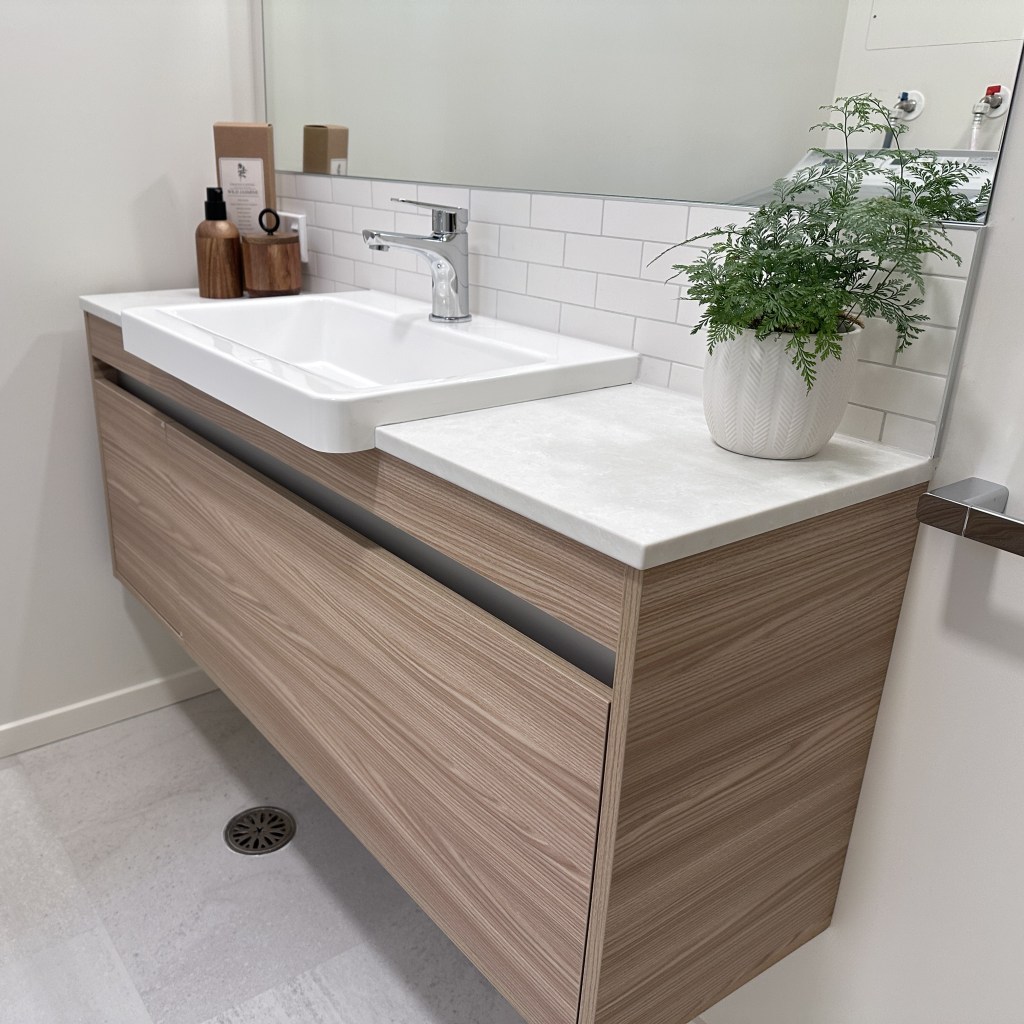
Often one of the smallest rooms in our home, bathrooms are complex spaces. Careful consideration at the planning and design stage is critical especially when you may have existing structures that you need to work around. Ensuring an end outcome that is functional, within budget and looks great is something that takes time and meticulous deliberation.
Here are some of the most common bathroom renovation questions I get asked from homeowners to help you with your planning.
Q. Can I change the layout of my bathroom?
Yes, typically, anything is possible! However, it is important to consider the budget implications of these types of decisions. Changing the location of fixtures can bump up the cost of your renovation considerably, depending on exactly what is changing. For example, moving a vanity further along the same wall may not have a significant cost impact, as the existing water and waste may be able to be slightly modified to suit the new plan. Moving a sanitary fixture, such as a toilet, can be much more complicated and could trigger a building consent requirement. I generally try to work around the existing toilet location, where possible, to create a bathroom space that achieves the homeowner’s outcome while still being mindful of the budget.
—
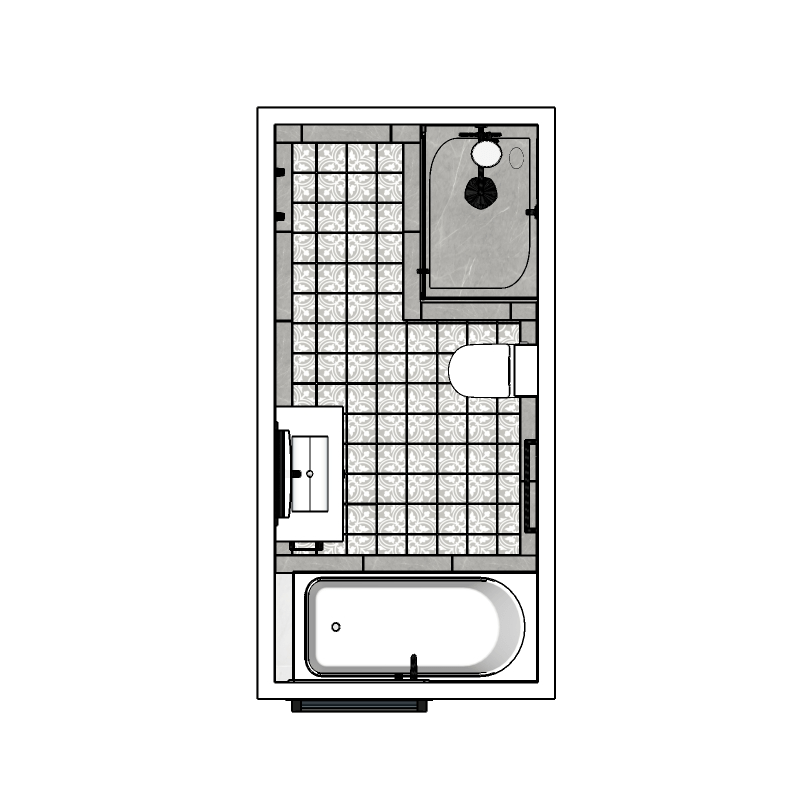
A recent project – separating the shower over bath. To keep costs down, the toilet has been left in its original position.
Q. Do I need a building consent?
This will vary from project to project as it depends on what you already have in place and what you are changing it for. As a general rule, you can replace “like for like” without building consent. However, building codes can be complicated and constantly evolving, so we recommend speaking to a professional at the beginning of your bathroom planning to ensure you have the latest and proper advice for your project.
Q. Is there a best location for some fixtures?
Yes, some things have an optimum location for aesthetic purposes, and some have an optimum location for ease of installation and functionality. For example;
Toilets – The preference is for toilets to be out of immediate eyeline when entering the bathroom. Where possible, having these situated on an external wall makes for easier and cheaper installation. In addition, many homeowners like to have these located under an opening window for ventilation.
Showers – Showers are great for internal walls – plumbers typically like to have the shower slide or column shower on an internal wall. Internal walls are great spaces to utilise for niches within the shower. Note: Shower mixers are best positioned so that you can regulate the water temperature both before entering the shower and during washing.
Bath Tubs – Baths make great focal points in a room, so an excellent location for a bath is underneath or in front of a window. If you are lucky to have privacy and great views, having a large-scale window can create a wow factor simply by taking advantage of your location. Another option, if you have the space, is allowing the bath to take centre stage by having a free-standing option in the middle of the room. If neither option works in your space, then centering it against an internal wall with a niche above also looks great.
Vanities and Mirrors – Vanity placement can sometimes be more flexible than the other larger items in a bathroom. However, one key consideration would be to position it so that the vanity mirror can take advantage of and reflect the space’s natural light. If this is not possible within your floor plan, ensure that you put in adequate artificial light.
—
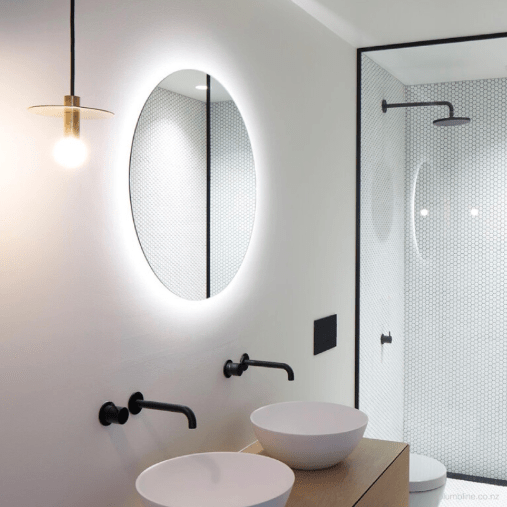
Example of an LED Mirror, this is great use of artificial light to compensate for a lack of natural light.
Q. Can I have a walk-in tiled shower?
Yes, walk-in showers look great, make your room feel more spacious, and are functional and accessible. However, you need to be aware of the budget implications of this decision. Typically, this type of shower will require building consent, particularly if you don’t already have this style of shower. Building consent will add extra time and cost to your renovation project. You will also need to modify your existing subfloor to create a level entry. This may mean cutting into your existing slab foundations. If this isn’t possible for your property, some minor changes can be made to the design. This will achieve a similar style look for you that will still give a beautiful finished result.
Q. What’s the difference in price between a vinyl plank and tiled floor?
This is dependent on a few different factors such as the following:
a) size of the room
b) choice of tile selection (e.g. tile size & price per square metre)
c) choice of vinyl flooring and its installation method
d) complexity of installation (e.g. is the tiler needing to create a pattern or make a lot of tile cuts)
In a recent project for a small bathroom the difference was between $2,000-$3,000. But this varies from project to project.
Q. Are there areas that need to be tiled?
Yes, some areas are recommended to be tiled, and for new builds in particular, the rules are stricter regarding waterproofing and tiling. These are:
a) Bath cradles – If you have a drop in the bath, then the bath surround should be tiled all the way around and a minimum of 150mm along the top and sides. However, sometimes more may be recommended from an interior design perspective to achieve a particular look.
b) Vanities – A minimum splashback size behind a vanity is 150mm high behind the tapware and out to the sides of the vanity. However, again, more may be recommended to attain a particular aesthetic.
c) Floors – For tiled floors, a minimum of 75mm tiled skirting is required around the circumference of a room.
d) Showers – There are many options with showers; if you opt for a tiled shower, then the tiling should run 300mm higher than the position of the shower head. All walls need to be fully tiled, as well as the floor. However, there is the option of using an acrylic shower or stainless steel tray in combination with tiled walls.
As you can see, there is much to consider when planning and designing your bathroom space. You are not alone if you feel overwhelmed with a sense of not knowing where to start. If you need help to kickstart your bathroom project, please get in touch.
Need help with your bathroom project?


Leave a Reply