
Nurtured by nature! Biophilic design is an ancient design practice with a foundational philosophy, of living spaces that foster a connection to nature give positive benefits to the people that inhabit them. More than just a passing trend, this design style is growing in popularity as research outlines the positive benefits. But how can you apply this design philosophy into your own home? Here we outline what the three main design strategies are that can be applied to any design project. Then we show how we have adapted these to two direct concept designs for a living room space.
- Direct experience of nature
- Light
- Air
- Water
- Plants
- Animals
- Landscape
- Weather
- Views
- Fire
- Indirect experience of nature
- Images
- Material
- Texture
- Colour
- Shapes and forms
- Information richness
- Change, age, and the patina of time
- Biomimicry
- Experience of space and place
- Prospect and Refuge
- Organised complexity
- Mobility
- Transitional spaces
- Place
- Integrating parts to create wholes
Biophilic Concept 1
Biophilic Concept 2
How direct experience of nature has been applied
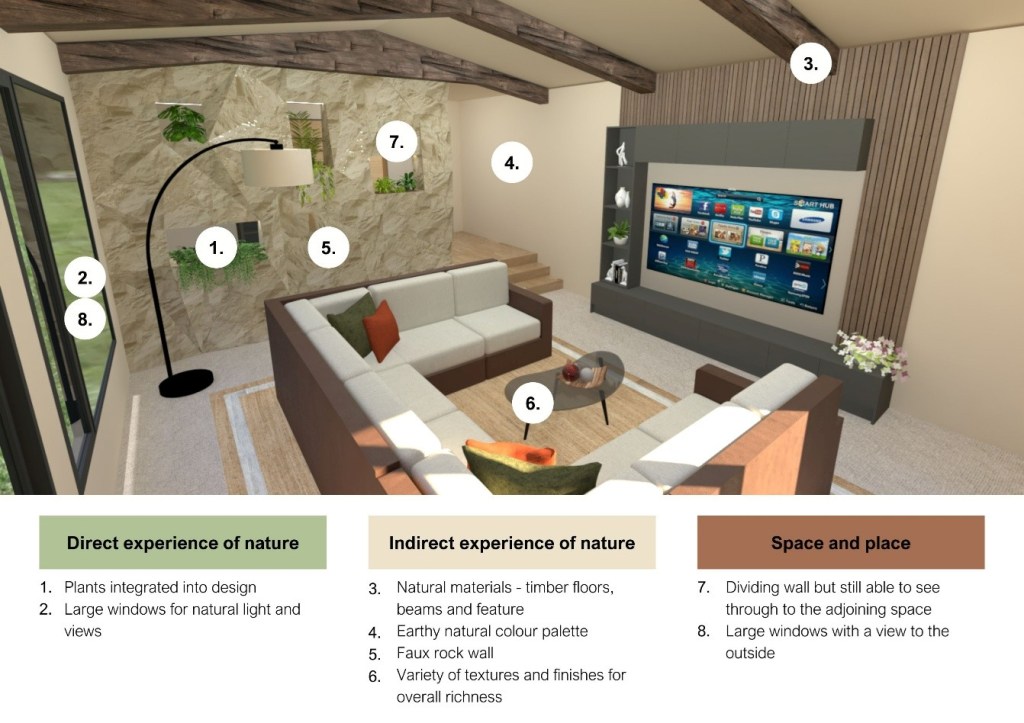
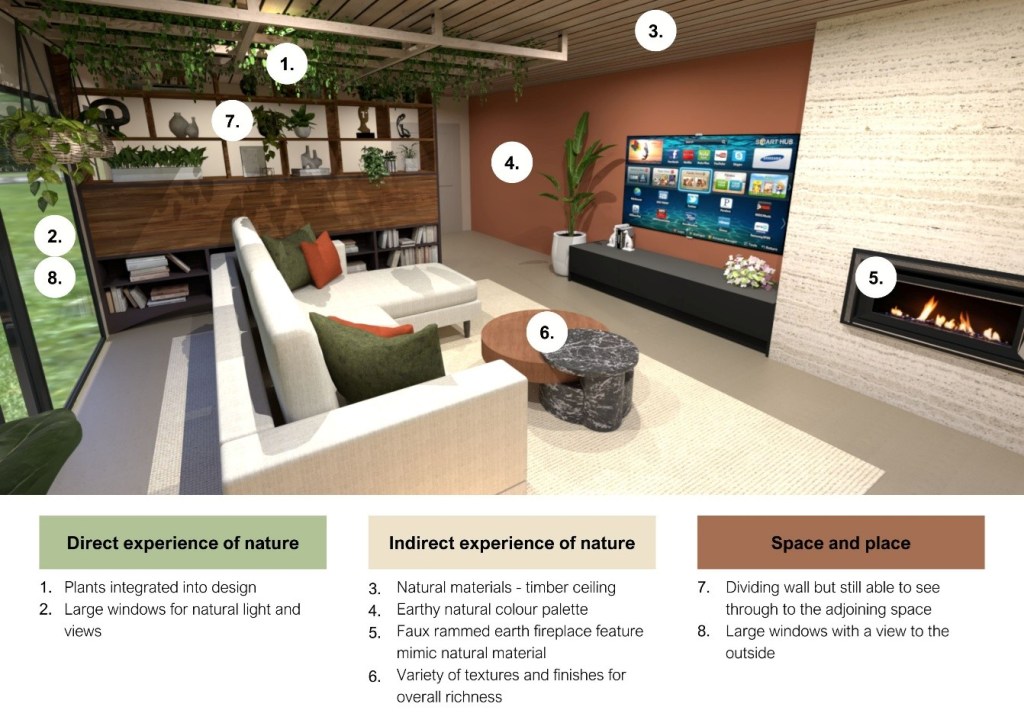
Having indoor plants creates a direct experience to nature through the plants themselves plus air and water as they play a regulatory role in purifying the air and creating a water balance. Plant life has been integrated into each design with specific built components required to
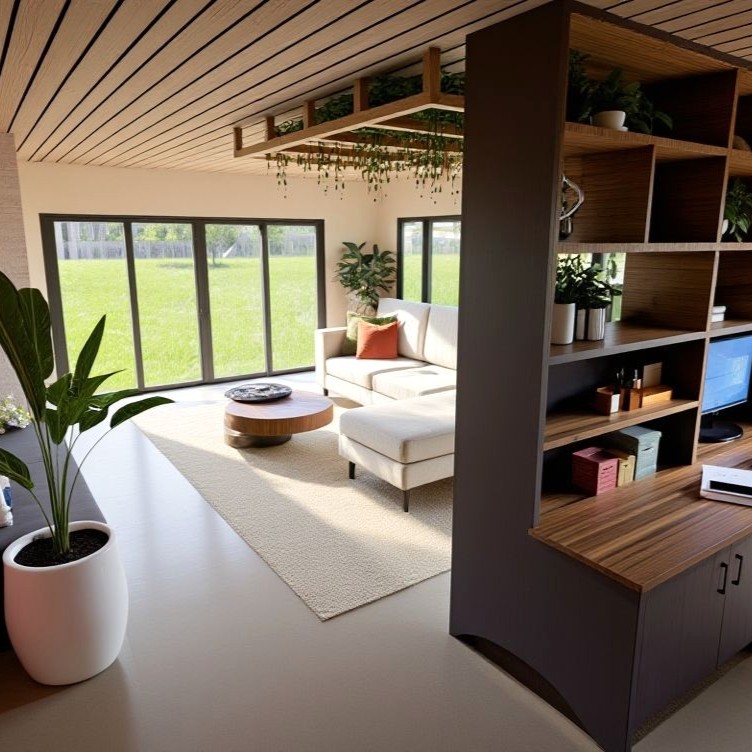
allow for dedicated space for plants to grow and thrive within each of the spaces. Large windows on the eastern façade and double stacker doors to the gardens beyond allow for lots of natural light, views and to experience the weather outside from the comfort of indoors.
How direct experience of nature has been applied
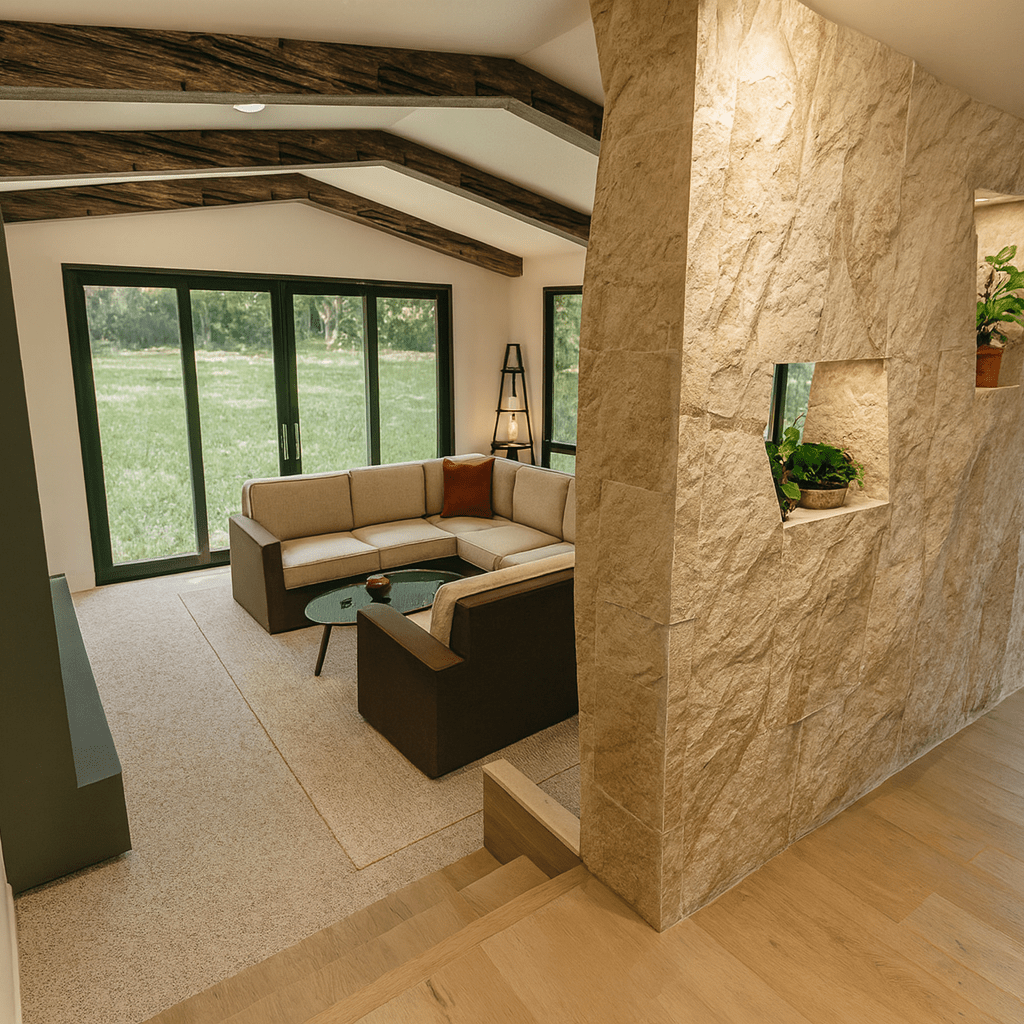
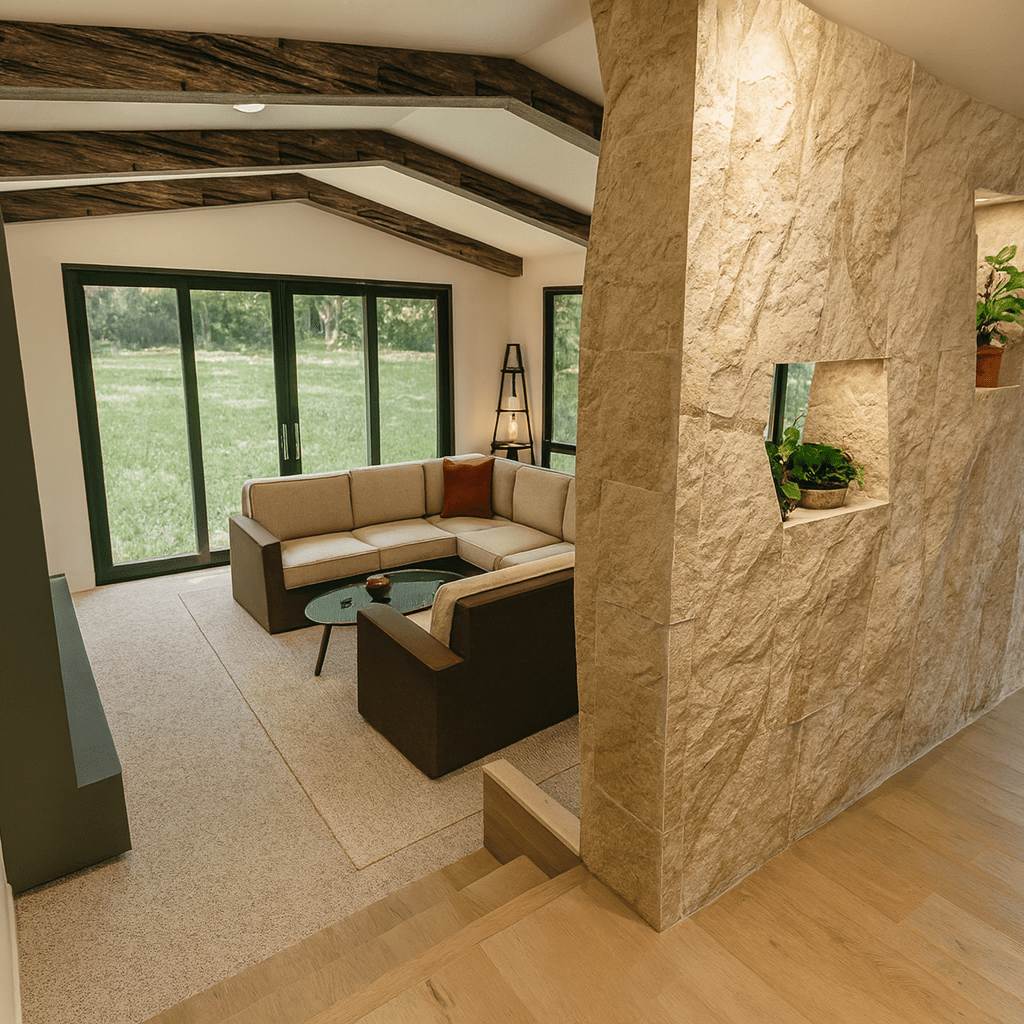
Biomimicry simplified means identifying natural forms and imitating these to create sustainable designs. This concept plays a huge role in both designs. The dividing rock wall is a constructed element with jagged timber framing overlaid with flexible decorative sheeting made from laminated polyester and fibreglass. These panels authentically recreate the look and feel of natural rock texture without the weight or expense. The fireplace surround is a thin 5mm sheet made from a cement clay mix with fibreglass reinforcing that gives a raw and textured appearance of rammed earth. These features provide a tactile experience through their texture and shapes.
Natural materials such as wooden surfaces have been linked to reduced noise pollution, improved acoustic comfort, and better thermal regulation. Timber floors leading to a sunken lounge (with large timber beams) and timber ceilings holding an overhead garden have been included in the different design options.
Information richness relates to needing diversity within the internal environment, so a variety of finishes and detail is needed in order to stimulate. This is encouraged over homogeneity, sameness, and uniformity. Within each design there are a number of opposing materials and textures. For example, polished concrete floors are paired with timber ceiling and large chunky loop pile rug. Smooth joinery sits alongside a faux rammed earth feature fireplace. An organic feeling textured rock wall is nestled between timber floors and soft woollen carpet. In both plants lift the spaces with a living contrast.
The biophilic colour palette typically features earthy tones such as deep green, brown, and warm hues, which are commonly found in wood and natural materials. These colours evoke a sense of warmth and a natural ambiance. In both designs the colour palette is neutral and natural. Varying shades of brown, beige and greige have been used with plants injecting some green contrast. In the second option a deep rich terracotta like colour has been used as a feature while still sitting within the natural colour palette realm.
How experience of space and place has been applied
People have an evolutionary preference for space that afford prospect and refuge. Prospect focuses on long vistas to view distant threats, whereas refuge speaks to the need for protection and security. In basic terms it is essentials pairing a cosy retreat with a view to the
outside. Mid century architects such as Frank Lloyd Wright used this concept when connecting interior spaces. Many modern open plan design favour long visual sight lines. In these designs both feature a dividing wall that has gaps where you can still see through to the room beyond and to the outside. This artfully combines these aspects of both prospect and refuge.
By applying certain aspects of each of the three main design strategies of biophilic design the end result is a design that is rooted in a connection to the natural world. Much more than following the latest trend this design has proven positive benefits for occupants to ensure enjoyment of the space for many years to come.
Need help planning your space?
 HOMEid
Leave a comment