

Tiles and glass are well-known and common splashback choices for all of the great reasons outlined below, but what are some of the other options that are available? We showcase some of our favourites!
Tiles
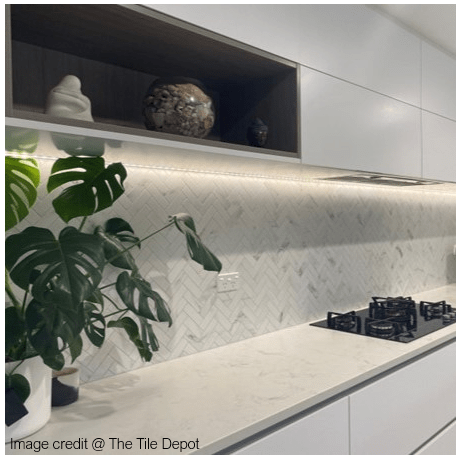
Tiles are a fantastic option for a splashback as they provide an opportunity to add colour and or texture into your design. Creating a complementary or contrasting feature within your space. Tiles are also low maintenance, durable and water resistance making for a robust surface.
As many other splashback options come in set sizes tiles are a great option if you have a particularly wide area. As some other products may require you to have a join at some point in the design. Whereas tiles can easily be laid along the entire surface with no obvious breaks.
Glass
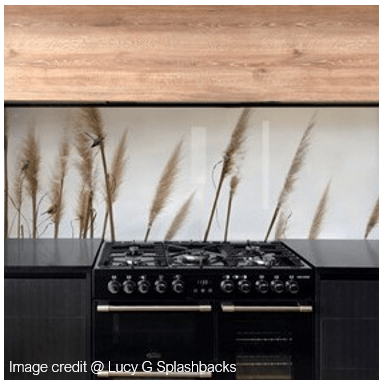
Not fond of grout lines? Glass can provide a seamless look. Hugely versatile it can be coloured with any Resene colour. Or opt for a dark mirrored finish for urban sophistication. Alternatively use your own custom feature design. There are lots of different ways to use glass to provide your kitchen with just
the right look. Bear in mind the following tips when choosing glass. Remember that glass has a wonderful reflective quality that helps to bounce more light into the space. As a result of this you can often go a shade or two darker on the splash back than what you might think. Plain solid colours particularly in lighter shades can show cooking marks more easily so you may feeling like you are constantly cleaning. Also remember that when renovating glass needs to have a final site measure after your kitchen cabinetry and benchtop have already been installed so you will need to allow for some additional production time as a general rule allow 2-3 weeks for this.
Solid Surface, Engineered Stone or Porcelain
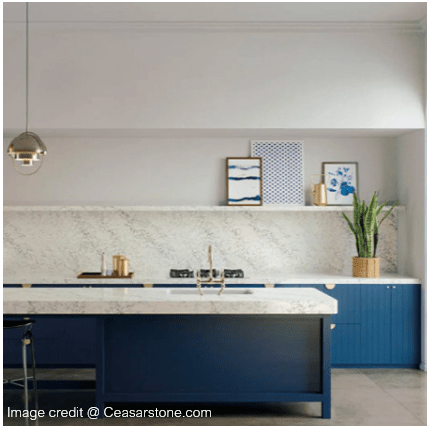
Match your benchtop and wrap up the walls for a beautiful and seamless look that is particularly favoured within the minimalist style. Note that this option is typically thicker than tiles and glass at a 20mm thickness so ensure this is factored into your plans early. Similar to glass this option needs to be templated after installation. Allow for
additional production time of 2-3 weeks. It also needs to have cuts out created for electrical fixtures which can increase the cost based on the number of cut outs that you have. Depending on your option of particular product this is also generally a more expensive option.
Laminate
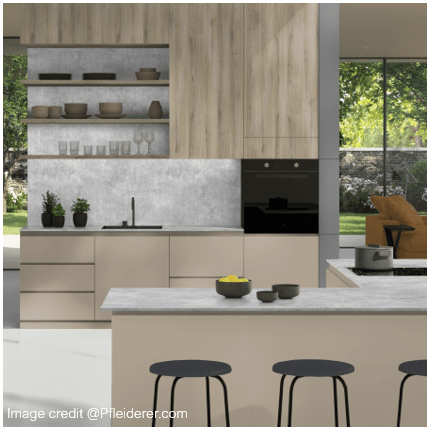
All of the great qualities that make laminate a suitable benchtop surface still apply when it is applied as a wall lining. Compact High Pressure Laminate is resistant to wear, impacts and scratching, making it long lasting and easy to clean. Thickness values and fire ratings vary but products are typically fire retardant and are between
4-6mm. You can use it to match your choice of benchtop for a harmonious look or opt for a bold contrast. As it is so thin it is ideal to run up the wall in behind floating shelves as well for a stunning look.
Seratone
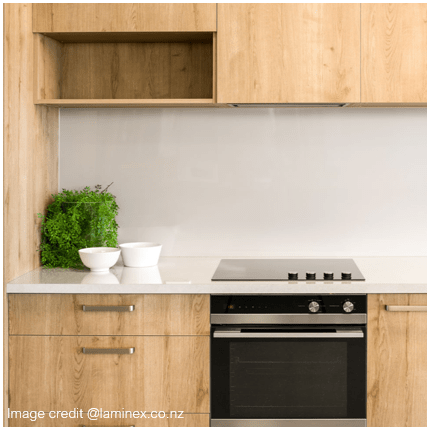
Seratone has been used as a wall lining (predominantly in bathrooms) for over 30 years. It is a light weight, high density board that is treated with an antimicrobial additive and UV coating making it a durable and easy to clean surface in your kitchen. Although it could be considered limited in range.
There are available finishes in high gloss to mimic glass, tile pattern to mimic subway tiles and new matte finishes that provide a more muted and organic feel for your space. Careful planning for distance to cooktop elements is important for this option.
Stainless Steel
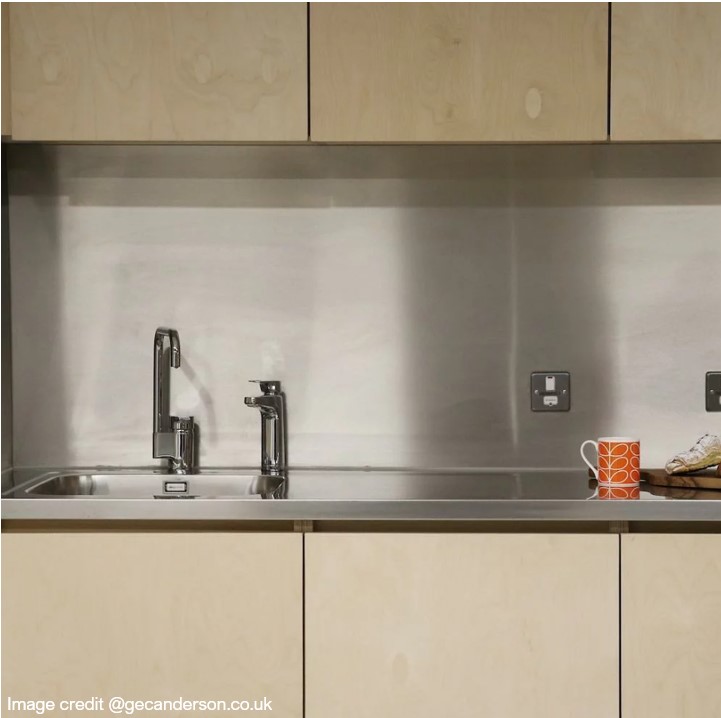
If you love stainless benchtops then the natural progression is to extend that to the splashback as well. Hygienic and highly durable stainless steel is a robust finish with great longevity. Talk to your designer or fabricator about finish options such as coloured or textured. Similar to other finishes extra time in your
renovation schedule needs to be added for this option as all of your cabinetry needs to be installed prior to a final site measure.
Faux brick or concrete
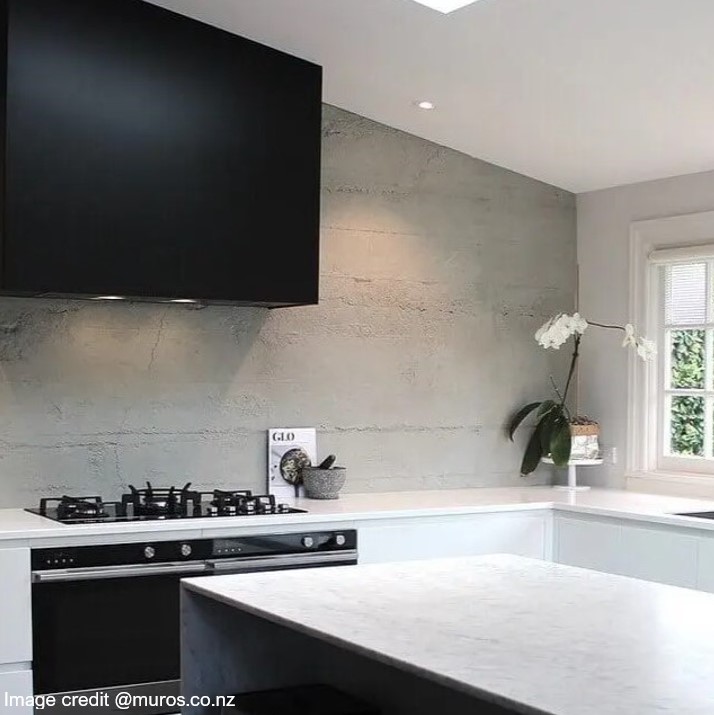
Real brick and concrete are surfaces that are too porous to be used as a splashback. Instead there are beautifully organic looking faux options available. These mimic the imperfections found in the real thing. These large format sheets are lightweight, fire resistant and low VOC panels can be easily installed to bring a raw, natural
element to your space. The exact dimensions vary depending on your preferred selection but typically run from between 4mm-20mm thickness so it is important to plan which option you would like well in advance.
Need some more advice about what to use in your project? We’re here to help.
 HOMEid
Leave a comment